Free powerlifting calculator
DOTS score calculator
Calculate a DOTS score from bodyweight and squat-bench-deadlift total in pounds or kilograms, with the exact coefficient method shown.
Reviewed December 4, 2025
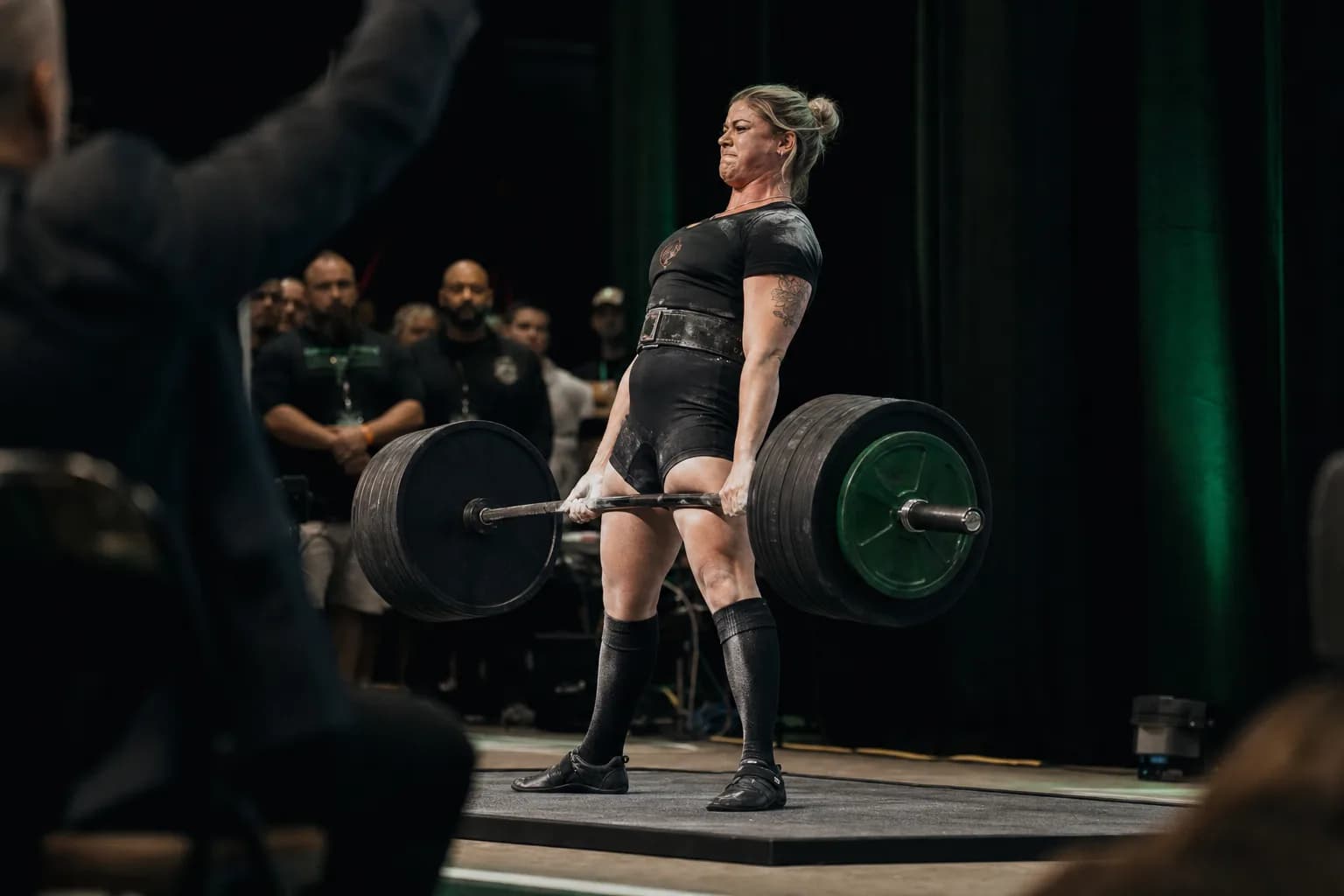
Powerlifting total comparison
DOTS score
404.5
Bodyweight-adjusted powerlifting total
Total / bodyweight
5.71×
Shown for context; this ratio is not DOTS.
Use the coefficient category that applies to the competition result being compared. DOTS is a sport score, not a health or training-readiness measure.
What this result means
DOTS scales a powerlifting total against bodyweight using sex-specific polynomial coefficients. It is useful for comparing sanctioned-style totals across body sizes, but it does not measure health, technique, training quality, or the value of an individual lift.
DOTS = total kg × 500 ÷ (a + bw×b + bw²×c + bw³×d + bw⁴×e).
What DOTS is comparing
A simple total-to-bodyweight ratio favors lighter lifters in ways that do not match observed strength scaling. DOTS uses a fitted curve to make cross-bodyweight comparison more practical.
Use the same scoring method when comparing results. DOTS, Wilks, and IPF GL are different formulas and their scores are not interchangeable.
Use a real total
For a competition-style comparison, enter the best successful squat, bench press, and deadlift from the same meet or test day. Adding lifetime bests from different dates creates a hypothetical total.
Gym lifts can still be tracked, but equipment, depth, pauses, judging, and straps materially change the comparison.
Frequently asked questions
What is a DOTS score?
It is a bodyweight-adjusted score based on a powerlifting total and sex-specific coefficients.
Is DOTS the same as Wilks?
No. They use different coefficients and produce different scores.
Can I calculate DOTS in pounds?
Yes. This tool converts pounds to kilograms before applying the formula.
Sources and assumptions
A total with its full history
Track the squat, bench, and deadlift behind the score.
LogFast keeps each approved lift, variation, and date available so the coach can discuss progress beyond a single bodyweight-adjusted number.
More free tools
One-rep max calculator
Estimate your one-rep max from weight and reps using Epley and Brzycki formulas, then see practical training percentages.
Barbell plate calculator
Enter a target barbell weight and see which standard plates to load on each side for common pound or kilogram bars, including any remainder.
Workout volume calculator
Calculate lifting volume load, total reps, and weekly tonnage from sets, reps, weight, and training frequency.