Treadmill logging guide
How to log treadmill workouts
Log treadmill pace, incline, intervals, machine distance, and effort while keeping indoor comparisons separate from outdoor running.
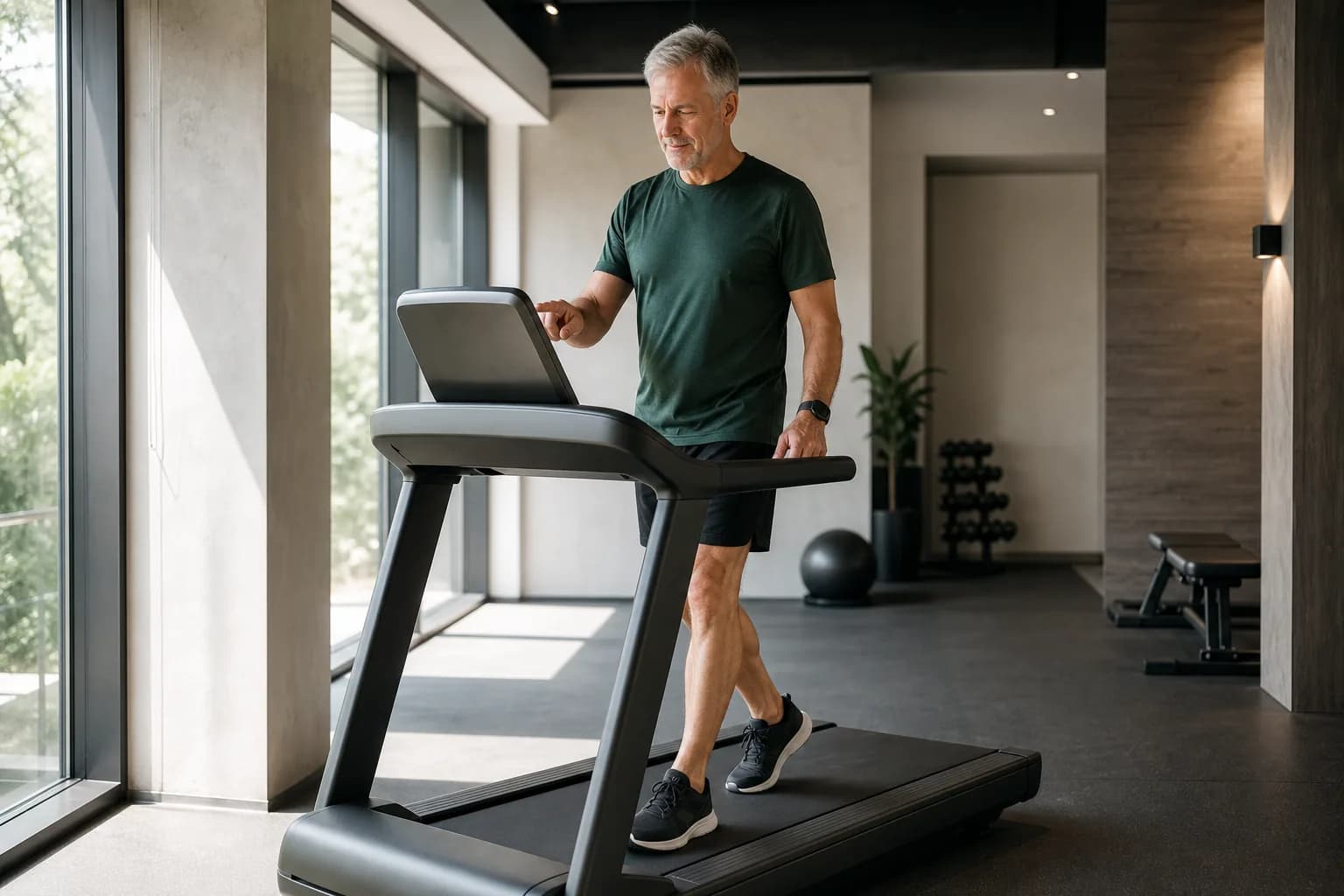
The short answer
A useful treadmill log records time, belt speed or displayed pace, incline, machine distance, workout structure, and effort. Preserve changes in speed and incline instead of relying only on the final average, note which machine or calibration issue mattered, and compare indoor sessions with similar indoor sessions before treating them as equivalent to outdoor runs.
Put this into practice
Run + Lift
5 days a week · 8 weeks · See every workout free
View the complete planKeep indoor context
Record the settings that make treadmill runs comparable.
State the console settings in your entry, then let LogFast structure duration, distance, and effort for the running history.
Track a treadmill runKeep treadmill-specific settings in the record
Start with elapsed time, machine-reported distance, belt speed or displayed pace, incline, and effort. If speed or incline changed, record the segments rather than one average. Note the machine when you rotate between gyms, because display, calibration, deck feel, and fan setup can affect the comparison.
Treadmill and overground running share many features, but systematic reviews find differences in some physiological, perceptual, performance, and biomechanical measures depending on speed and conditions. That means a treadmill pace is useful data without being a guaranteed substitute for outdoor pace.
- Continuous run: duration, speed or pace, incline, distance, and RPE
- Intervals: every work and recovery setting plus completed repetitions
- Context: machine, fan, handrail use, pauses, or display issues
- Correction: note manual distance or time changes instead of silently replacing them
Log a continuous treadmill run
A steady example is: “Treadmill easy run — 35 min, 1% displayed incline, 9.5 km/h, machine distance 5.54 km, conversational, RPE 3, fan on.” If you used a progression, split it: “10 min at 8.8 km/h, 15 min at 9.4, 10 min at 10.0; incline unchanged.”
Do not add an incline solely to make the treadmill “equal” to outdoor running unless that setting serves your workout. A fixed percentage is an imperfect shortcut across speeds, runners, and machines. Treat incline as a training variable and record the value you actually used.
Machine-reported speed, distance, and incline are settings to preserve—not proof that an outdoor route would produce the same result.
Preserve incline and interval changes
For hill work, record incline and speed for each block: “8 × 60 sec at 6% and 10 km/h; 90 sec at 1% and 6 km/h; all completed; RPE 8.” For mixed intervals, note whether recovery involved reducing speed, incline, or both. The average summary will hide these changes.
Record pauses and ramp time when they affect the protocol. Some treadmills take several seconds to reach a target speed, so an interval labeled “60 seconds at 15 km/h” may include acceleration. Use the same convention each time—such as starting the clock when the belt reaches speed—and write it down when precise comparison matters.
Build a clean indoor comparison set
Compare workouts on the same or similar machine, with the same incline convention and segment structure. Look for lower effort at the same settings, more completed work, or steadier late intervals. If you also run outside, keep those comparisons separate until repeated sessions show how the two contexts relate for you.
Enter the treadmill session in LogFast and correct structured duration, distance, or effort before saving. Keep console settings in the entry for your own matched-session review; Coach receives the structured metrics, not every setting. LogFast does not automatically read the treadmill or import its data.
Frequently asked questions
Should I always use a 1% treadmill incline?
No fixed incline makes every treadmill run equivalent to outdoor running. Choose incline for the workout you intend, record it, and keep it consistent when you want a clean comparison.
Should I trust treadmill distance or my watch?
Either can differ from the true value. Record which source you used, note obvious errors, and use the same source for repeated comparisons when possible rather than combining values without explanation.
How do I log treadmill intervals?
Record each work speed, incline, and duration; each recovery setting and duration; the number completed; ramp-time convention when relevant; and overall effort.