Concurrent training guide
How to add cardio after lifting
Choose a post-lift cardio mode, duration, and intensity that fit the lifting dose, then record both parts and review later strength performance.
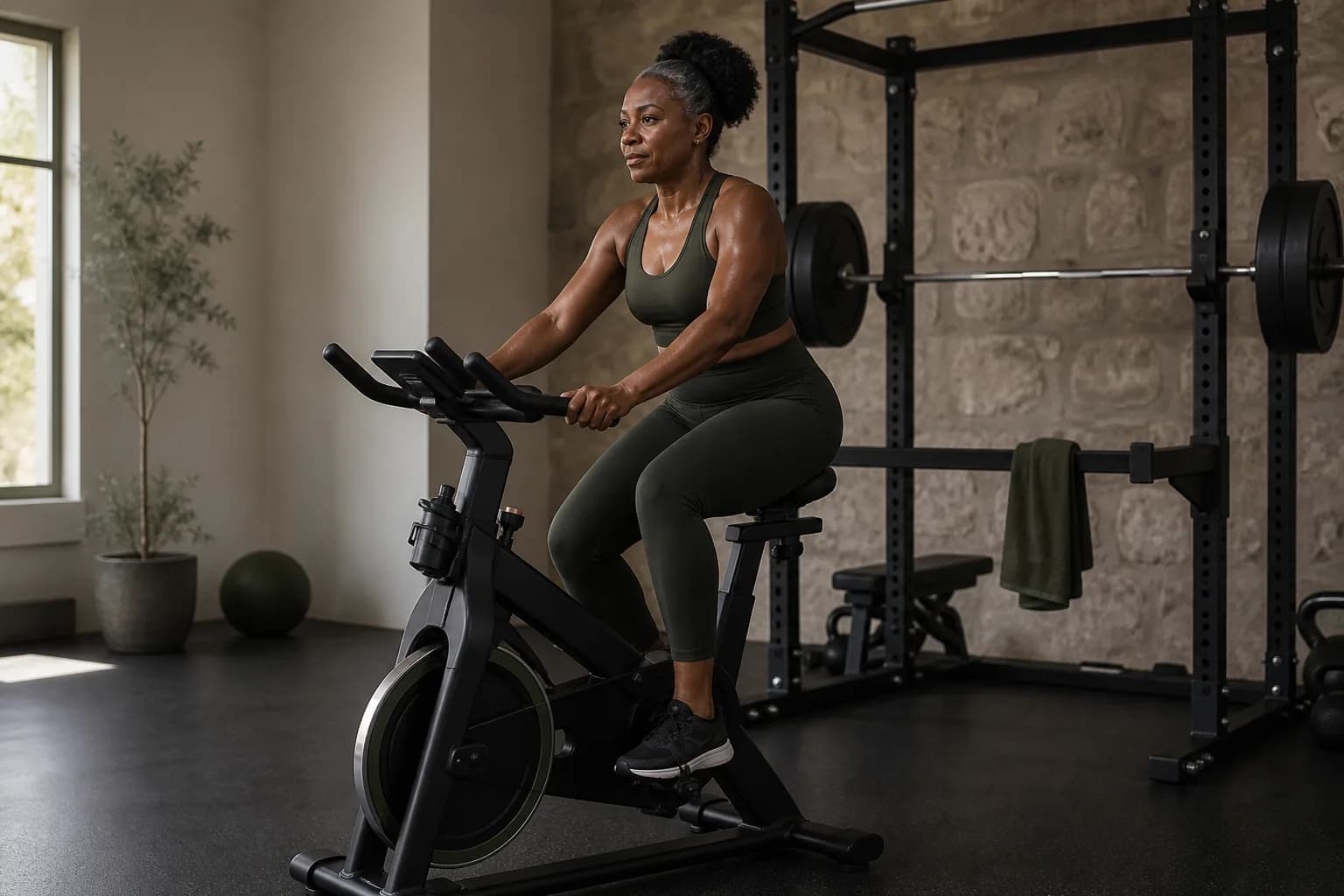
The short answer
Cardio after lifting should have a defined job and a dose that respects the strength work already completed. Choose a mode with manageable local overlap, set duration and intensity before fatigue turns the finish into an unplanned test, and preserve the lifting and cardio details together. Judge the choice by whether later priority strength sessions remain repeatable, not by calories or exhaustion alone.

Put this into practice
Run + Lift
5 days a week · 8 weeks · See every workout free
View the complete planRecord the whole session
See cardio beside the lifting that came first.
LogFast keeps lifting performance, cardio duration or distance, and overall effort in one approved workout record.
Log a combined workoutDefine what the cardio is for
Cardio after lifting might be an easy aerobic addition, a short cooldown, or a separate performance workout. Name that purpose first. If strength quality is the priority, keeping the follow-up work controlled usually creates a clearer day than adding unplanned hard intervals because you still feel energetic.
Mode matters too. Cycling, walking on an incline, rowing, and running create different local demands and skill requirements. Choose a mode you can execute safely while fatigued and that does not unnecessarily compete with the muscles or movement quality you are trying to protect.
Choose a mode with manageable overlap
The same duration can create different local demands. Running after high-volume lower-body lifting asks more of already trained tissues than relaxed cycling after an upper-body session. Rowing adds repeated pulling and trunk work; incline walking changes lower-leg and hip demand. Select the mode by what the lift used and what the next priority session needs.
Concurrent-training evidence broadly supports combining aerobic and strength work, while some outcomes and arrangements may be more sensitive than others. It does not identify one universally safest or most effective post-lift machine. Use the evidence to keep the dose deliberate, not to claim that one modality always protects strength gains.
Post-lift cardio is a dose decision: mode, duration, and intensity sit on top of work already completed.
Scale the finish to the lifting session
After an upper-body session, a brief easy cycle may create less local overlap than it would after demanding squats. A hard running workout after lower-body training is a different decision from either. Example: “Lower body — squat 100 kg 4 × 5 at 2 RIR; then bike 18 min easy, RPE 3, full conversation, no resistance progression planned.”
For a more demanding pairing, make the tradeoff explicit: “Upper body strength completed as planned; rower 5 × 2 min hard / 2 min easy, final rep shortened.” This prevents the full day from being summarized as either a normal lift or a generic cardio session.
- Lift: exercises, working sets, reps, load, and optional RIR
- Transition: time between lifting and cardio
- Cardio: mode, duration, distance or output, and intensity cue
- Outcome: completion, modifications, and next comparable performance
Review whether the combination is repeatable
Compare similar days over several exposures. Watch for repeated drops in main-lift reps, higher effort at familiar loads, inability to keep the cardio easy, or worse performance in the next priority session. One tired finish is not proof of interference; a stable pattern is more actionable.
Keep the completed lifting sets and cardio duration, distance, and effort in the same LogFast record when they formed one continuous session, then correct any inferred field before saving. Review that record beside the next comparable strength workouts. Coach can discuss the structured workload, but the app does not automatically classify the cardio dose or decide whether it belongs after lifting.
Frequently asked questions
Does cardio after lifting hurt strength gains?
Not automatically. The effect depends on the cardio mode and dose, the lifting, overall training, and the outcome you care about. Track repeated lifting performance instead of treating the order alone as the cause.
What cardio is best after lifting?
Choose the mode whose local demands fit the lift you completed and the next priority workout. Easy cycling or walking may be practical in some sessions, but no single modality or dose is best for every goal.
How should I record cardio after weights?
Record the lifting work, cardio mode, duration, intensity, transition time, and any modification. Keep the sequence visible during later review because calculated summaries do not encode workout order.